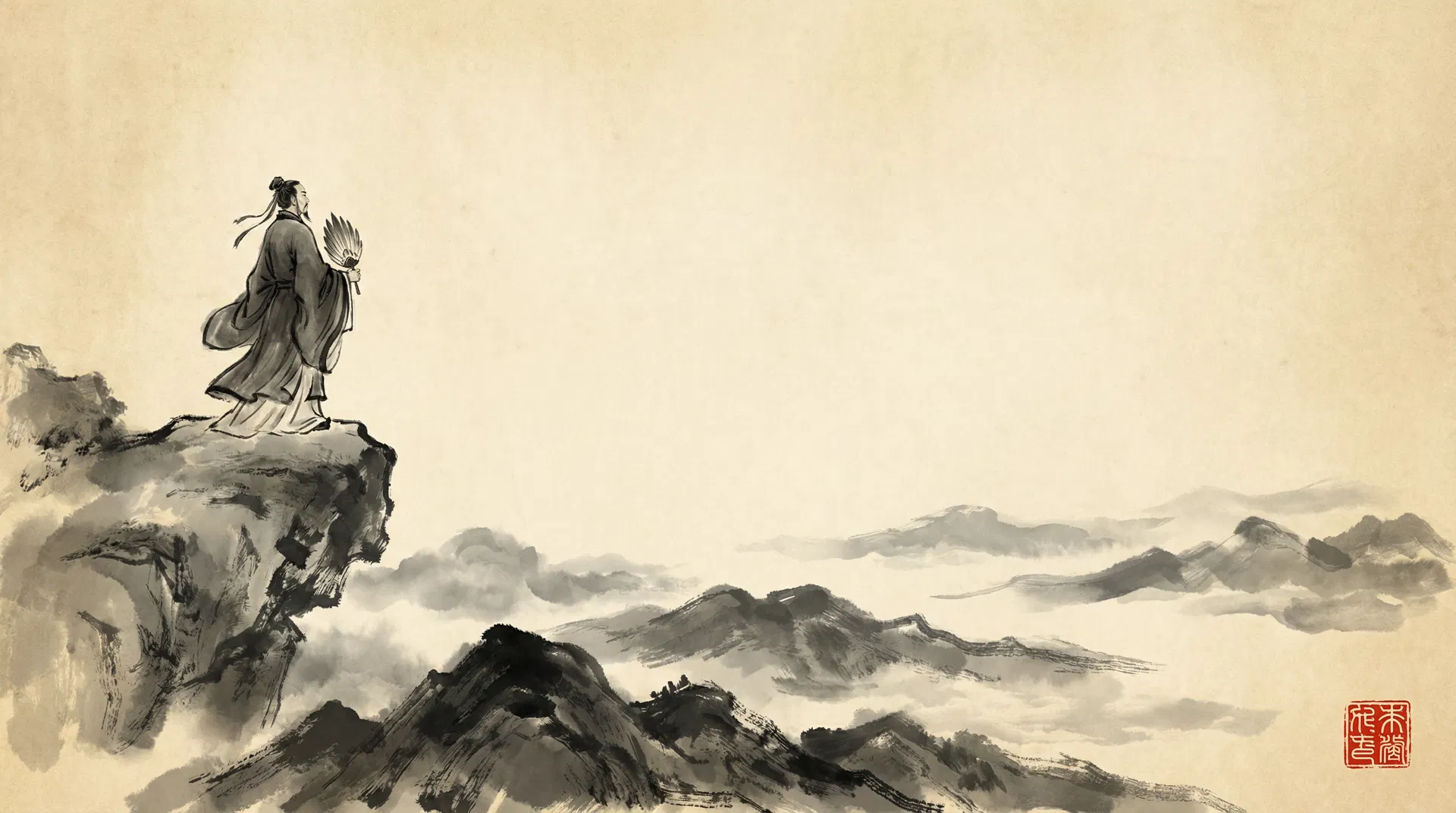
Zhuge Liang
Mastery
A curated collection of the ancient texts that forged one of history's greatest strategic minds. Read the books that shaped Kong Ming.
The Mind of the Sleeping Dragon
A Master Summary for the Modern Tactician
Zhuge Liang, known as Kongming or the "Sleeping Dragon," was more than a military strategist — he was a master of human nature, a brilliant administrator, and a visionary leader. His genius was not born from a single source but was the culmination of a diverse and unconventional education that blended philosophy, strategy, and practical knowledge.
This collection is your guide to that blueprint. We have compiled the essential texts that shaped Zhuge Liang's mind, providing not only access to these works but also summaries that distill their core principles. By studying these classics, you will learn to think like Kongming: to see the bigger picture, to anticipate the flow of events, and to act with decisive and calculated precision.
Zhuge Liang's approach was holistic. He understood that true mastery lies not in specializing in a single discipline but in integrating knowledge from various domains. He combined the philosophical wisdom of Taoism with the administrative rigor of Legalism, the strategic brilliance of Sun Tzu with the organizational principles of the Sima, and the practical insights of geography and engineering with a deep understanding of human psychology.
Unlike many scholars of his time who focused on rote memorization of Confucian texts, Kong Ming was known for "reading for the general idea" rather than obsessing over every word. He didn't just read books — he "read" people. He associated with the Jingzhou intellectual circle, including masters like Pang Degong and Sima Hui (Water Mirror). These mentors pushed him to look at the "big picture" of the empire rather than the narrow academic debates of the imperial capital.
By immersing yourself in these texts, you will not only gain a deeper appreciation for one of history's greatest minds but also acquire a set of mental models and strategic tools that are as relevant today as they were in the Three Kingdoms period. This is your opportunity to awaken the sleeping dragon within.
Words of the Masters
Key Quotes & Their Application
"The supreme art of war is to subdue the enemy without fighting."
How Zhuge Liang Applied This
Zhuge Liang embodied this principle in his Southern Campaign, capturing and releasing Meng Huo seven times until the rebel leader submitted willingly — winning a lasting peace without a decisive battle.
1 / 12
The Reading Path
A Guided Journey Through the Texts
Romance of the Three Kingdoms
三國演義Start here to understand the world Zhuge Liang inhabited. This historical novel provides the narrative context — the characters, the battles, the political intrigue — that makes every other text on this list come alive.
The Art of War
孫子兵法The single most important strategic text in history. Sun Tzu's thirteen chapters will give you the core vocabulary of strategy — deception, terrain, timing, and the supreme art of winning without fighting.
Tao Te Ching
道德經Now that you understand the 'what' of strategy, learn the 'why.' The Tao Te Ching reveals the philosophical engine behind Zhuge Liang's thinking — the power of yielding, the virtue of emptiness, and the flow of natural forces.
Thirty-Six Stratagems
三十六計A practical companion to The Art of War. These concise stratagems are memorable and immediately applicable — from 'Kill with a borrowed sword' to 'Create something from nothing.'
The Way of the General
將苑Hear from Zhuge Liang himself. This short treatise on leadership distills his philosophy of command — the qualities a leader must cultivate and the traps they must avoid.
Chu Shi Biao
出師表End the beginner's path with Zhuge Liang's most personal writing. These memorials reveal the heart behind the mind — his loyalty, his vision, and his unwavering sense of duty.
The Life of the Sleeping Dragon
181 AD — 234 AD & Beyond
Trace the arc of Zhuge Liang's extraordinary life — from orphaned youth to the most celebrated strategist in Chinese history — and discover when each text influenced the pivotal events of his career.
Birth in Yangdu, Langya Commandery
Zhuge Liang was born into a family of minor officials in present-day Shandong province. His father, Zhuge Gui, served as a local administrator. The young Kongming would soon be orphaned, setting the stage for a life shaped by self-reliance and unconventional education.
Birth in Yangdu, Langya Commandery
Zhuge Liang was born into a family of minor officials in present-day Shandong province. His father, Zhuge Gui, served as a local administrator. The young Kongming would soon be orphaned, setting the stage for a life shaped by self-reliance and unconventional education.
Orphaned & Taken in by Uncle Zhuge Xuan
After losing both parents, Zhuge Liang and his siblings were raised by their uncle Zhuge Xuan, who served under Liu Biao in Jingzhou. This move to the intellectual heartland of southern China would prove transformative, placing the young scholar at the center of one of the era's most vibrant intellectual communities.
Orphaned & Taken in by Uncle Zhuge Xuan
After losing both parents, Zhuge Liang and his siblings were raised by their uncle Zhuge Xuan, who served under Liu Biao in Jingzhou. This move to the intellectual heartland of southern China would prove transformative, placing the young scholar at the center of one of the era's most vibrant intellectual communities.
The Longzhong Hermitage — A Decade of Study
After his uncle's death, Zhuge Liang retreated to a farming life in Longzhong, near modern Xiangyang. But this was no idle retirement. For ten years, he immersed himself in a rigorous program of self-education, studying the Taoist and Legalist classics, the military treatises, geography, astronomy, and mechanical engineering. He was known for 'reading for the general idea' — grasping the essence rather than memorizing every word.
The Longzhong Hermitage — A Decade of Study
After his uncle's death, Zhuge Liang retreated to a farming life in Longzhong, near modern Xiangyang. But this was no idle retirement. For ten years, he immersed himself in a rigorous program of self-education, studying the Taoist and Legalist classics, the military treatises, geography, astronomy, and mechanical engineering. He was known for 'reading for the general idea' — grasping the essence rather than memorizing every word.
The Jingzhou Intellectual Circle
During his hermitage, Zhuge Liang cultivated relationships with the most brilliant minds of the era. His mentors included Pang Degong and Sima Hui (the 'Water Mirror'), who pushed him to think about the 'big picture' of the empire. His peers included Pang Tong ('the Young Phoenix'), Xu Shu, and Cui Zhouping. It was Sima Hui who gave him the epithet 'the Sleeping Dragon.'
The Jingzhou Intellectual Circle
During his hermitage, Zhuge Liang cultivated relationships with the most brilliant minds of the era. His mentors included Pang Degong and Sima Hui (the 'Water Mirror'), who pushed him to think about the 'big picture' of the empire. His peers included Pang Tong ('the Young Phoenix'), Xu Shu, and Cui Zhouping. It was Sima Hui who gave him the epithet 'the Sleeping Dragon.'
Three Visits to the Thatched Cottage
Liu Bei, a warlord seeking to restore the Han dynasty, visited Zhuge Liang's humble cottage three times before the reclusive scholar agreed to serve him. At this meeting, Zhuge Liang presented the 'Longzhong Plan' — a geopolitical masterwork that outlined a strategy for dividing China into three kingdoms and ultimately reunifying it under Liu Bei's rule. This plan demonstrated his mastery of geography, economics, and political analysis.
Three Visits to the Thatched Cottage
Liu Bei, a warlord seeking to restore the Han dynasty, visited Zhuge Liang's humble cottage three times before the reclusive scholar agreed to serve him. At this meeting, Zhuge Liang presented the 'Longzhong Plan' — a geopolitical masterwork that outlined a strategy for dividing China into three kingdoms and ultimately reunifying it under Liu Bei's rule. This plan demonstrated his mastery of geography, economics, and political analysis.
The Battle of Red Cliffs (Chibi)
In one of the most decisive battles in Chinese history, Zhuge Liang helped forge an alliance between Liu Bei and Sun Quan against the overwhelming forces of Cao Cao. His legendary ability to 'predict' the southeastern wind — likely derived from his deep study of astronomy and weather patterns — enabled the fire attack that destroyed Cao Cao's fleet and changed the course of the Three Kingdoms era.
The Battle of Red Cliffs (Chibi)
In one of the most decisive battles in Chinese history, Zhuge Liang helped forge an alliance between Liu Bei and Sun Quan against the overwhelming forces of Cao Cao. His legendary ability to 'predict' the southeastern wind — likely derived from his deep study of astronomy and weather patterns — enabled the fire attack that destroyed Cao Cao's fleet and changed the course of the Three Kingdoms era.
Conquest of Yi Province (Shu)
Zhuge Liang played a crucial role in Liu Bei's campaign to capture the rich and strategically vital province of Yi (modern Sichuan). His logistical planning and diplomatic skills were instrumental in securing the territory that would become the foundation of the Kingdom of Shu Han.
Conquest of Yi Province (Shu)
Zhuge Liang played a crucial role in Liu Bei's campaign to capture the rich and strategically vital province of Yi (modern Sichuan). His logistical planning and diplomatic skills were instrumental in securing the territory that would become the foundation of the Kingdom of Shu Han.
Appointed Chancellor of Shu Han
When Liu Bei declared himself emperor of Shu Han, he appointed Zhuge Liang as his Chancellor — the highest administrative office in the kingdom. In this role, Zhuge Liang implemented sweeping Legalist-inspired reforms: a strict but fair legal code, an efficient bureaucracy, agricultural improvements, and the development of the Shu brocade trade that funded the kingdom's military campaigns.
Appointed Chancellor of Shu Han
When Liu Bei declared himself emperor of Shu Han, he appointed Zhuge Liang as his Chancellor — the highest administrative office in the kingdom. In this role, Zhuge Liang implemented sweeping Legalist-inspired reforms: a strict but fair legal code, an efficient bureaucracy, agricultural improvements, and the development of the Shu brocade trade that funded the kingdom's military campaigns.
Death of Liu Bei — The Baidicheng Entrustment
After the disastrous Battle of Yiling, a dying Liu Bei entrusted the care of his young son Liu Shan and the entire kingdom to Zhuge Liang. This moment of supreme trust — Liu Bei reportedly told him 'If my son is worthy, assist him; if not, take the throne yourself' — defined the rest of Zhuge Liang's life as a regent devoted to an oath of loyalty.
Death of Liu Bei — The Baidicheng Entrustment
After the disastrous Battle of Yiling, a dying Liu Bei entrusted the care of his young son Liu Shan and the entire kingdom to Zhuge Liang. This moment of supreme trust — Liu Bei reportedly told him 'If my son is worthy, assist him; if not, take the throne yourself' — defined the rest of Zhuge Liang's life as a regent devoted to an oath of loyalty.
The Southern Campaign — Pacification of Nanzhong
Zhuge Liang led a campaign to pacify the rebellious southern territories. His strategy of 'capturing the heart' — famously capturing and releasing the rebel leader Meng Huo seven times until he submitted willingly — demonstrated his mastery of psychological warfare and his belief that lasting peace required genuine loyalty, not mere submission.
The Southern Campaign — Pacification of Nanzhong
Zhuge Liang led a campaign to pacify the rebellious southern territories. His strategy of 'capturing the heart' — famously capturing and releasing the rebel leader Meng Huo seven times until he submitted willingly — demonstrated his mastery of psychological warfare and his belief that lasting peace required genuine loyalty, not mere submission.
The First Chu Shi Biao (Memorial on Dispatching the Troops)
Before launching his first Northern Expedition against the state of Wei, Zhuge Liang submitted his famous memorial to the young emperor Liu Shan. This deeply personal document outlined his strategic vision, his advice for governance, and his unwavering commitment to restoring the Han dynasty. It remains one of the most celebrated pieces of Chinese prose.
The First Chu Shi Biao (Memorial on Dispatching the Troops)
Before launching his first Northern Expedition against the state of Wei, Zhuge Liang submitted his famous memorial to the young emperor Liu Shan. This deeply personal document outlined his strategic vision, his advice for governance, and his unwavering commitment to restoring the Han dynasty. It remains one of the most celebrated pieces of Chinese prose.
The Five Northern Expeditions
Zhuge Liang launched five major campaigns against the much larger state of Wei, seeking to fulfill his promise to Liu Bei. Though he never achieved the decisive victory he sought, his campaigns demonstrated extraordinary logistical skill, innovative tactics, and the deployment of his own inventions — including the 'Wooden Ox and Flowing Horse' automated transport system and the repeating crossbow (Zhuge Nu).
The Five Northern Expeditions
Zhuge Liang launched five major campaigns against the much larger state of Wei, seeking to fulfill his promise to Liu Bei. Though he never achieved the decisive victory he sought, his campaigns demonstrated extraordinary logistical skill, innovative tactics, and the deployment of his own inventions — including the 'Wooden Ox and Flowing Horse' automated transport system and the repeating crossbow (Zhuge Nu).
Death at Wuzhang Plains
During his fifth Northern Expedition, Zhuge Liang fell ill and died at the military camp on Wuzhang Plains. According to legend, he had attempted to extend his life through a Taoist ritual, but it was disrupted. Even in death, he outwitted his rival Sima Yi — his retreating army used a wooden statue of him to frighten the Wei forces into retreat, giving rise to the saying: 'A dead Zhuge scares away a living Sima.'
Death at Wuzhang Plains
During his fifth Northern Expedition, Zhuge Liang fell ill and died at the military camp on Wuzhang Plains. According to legend, he had attempted to extend his life through a Taoist ritual, but it was disrupted. Even in death, he outwitted his rival Sima Yi — his retreating army used a wooden statue of him to frighten the Wei forces into retreat, giving rise to the saying: 'A dead Zhuge scares away a living Sima.'
Fall of Shu Han
Twenty-nine years after Zhuge Liang's death, the Kingdom of Shu Han fell to the forces of Wei (by then controlled by the Sima family). Yet Zhuge Liang's legacy endured. He was posthumously honored as the 'Marquis of Loyalty and Martial Virtue,' and his writings, inventions, and strategic principles continued to influence Chinese civilization for millennia.
Fall of Shu Han
Twenty-nine years after Zhuge Liang's death, the Kingdom of Shu Han fell to the forces of Wei (by then controlled by the Sima family). Yet Zhuge Liang's legacy endured. He was posthumously honored as the 'Marquis of Loyalty and Martial Virtue,' and his writings, inventions, and strategic principles continued to influence Chinese civilization for millennia.
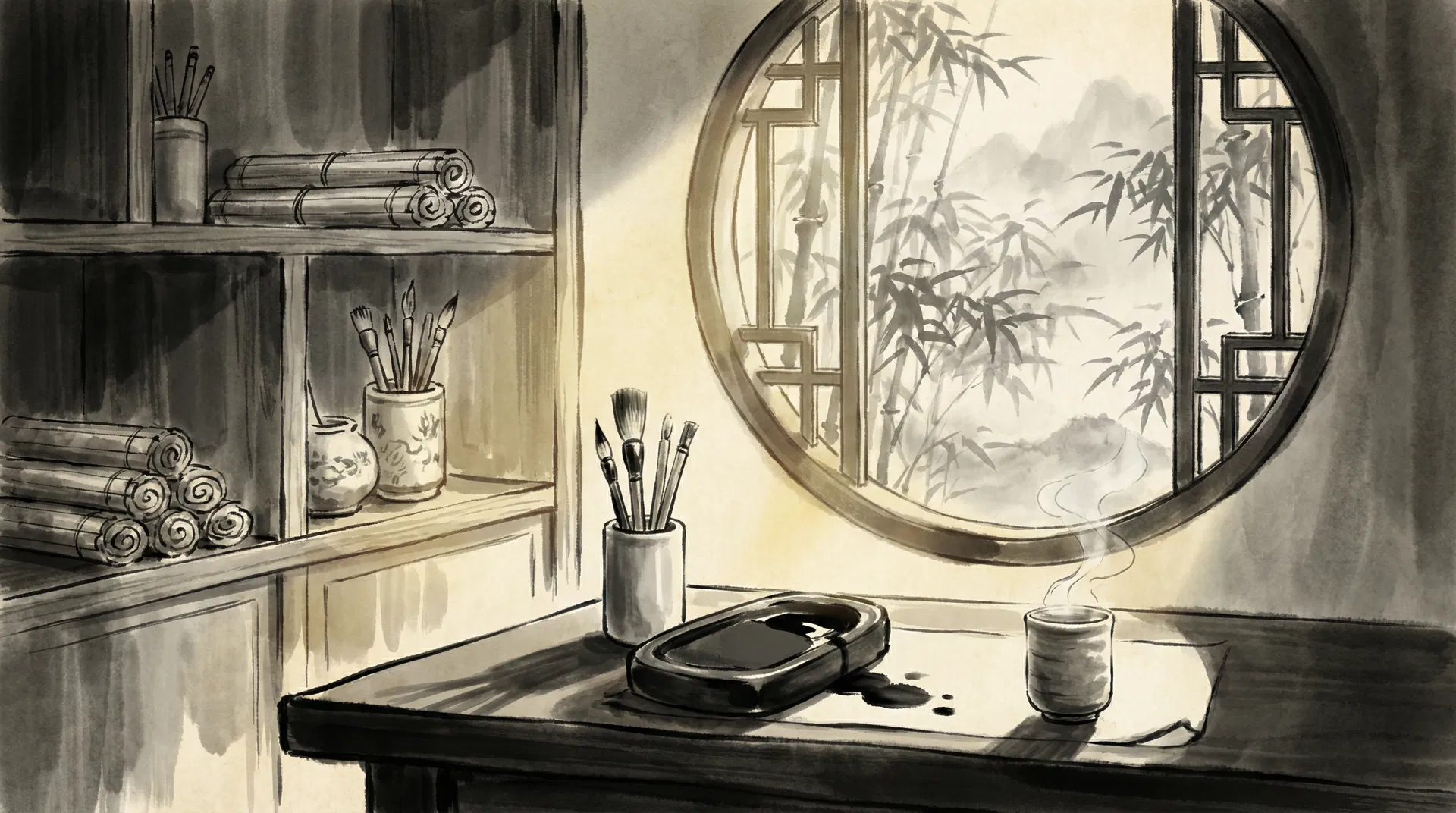
The Taoist & Legalist Classics
The Philosophical Foundation
While he was well-versed in Confucianism, Kong Ming's pragmatic "tactfulness" came from his study of Taoism and Legalism. These texts taught him about the flow of nature, the balance of opposites, strict discipline, administrative efficiency, and the "rule of law" approach he used to govern the Kingdom of Shu.
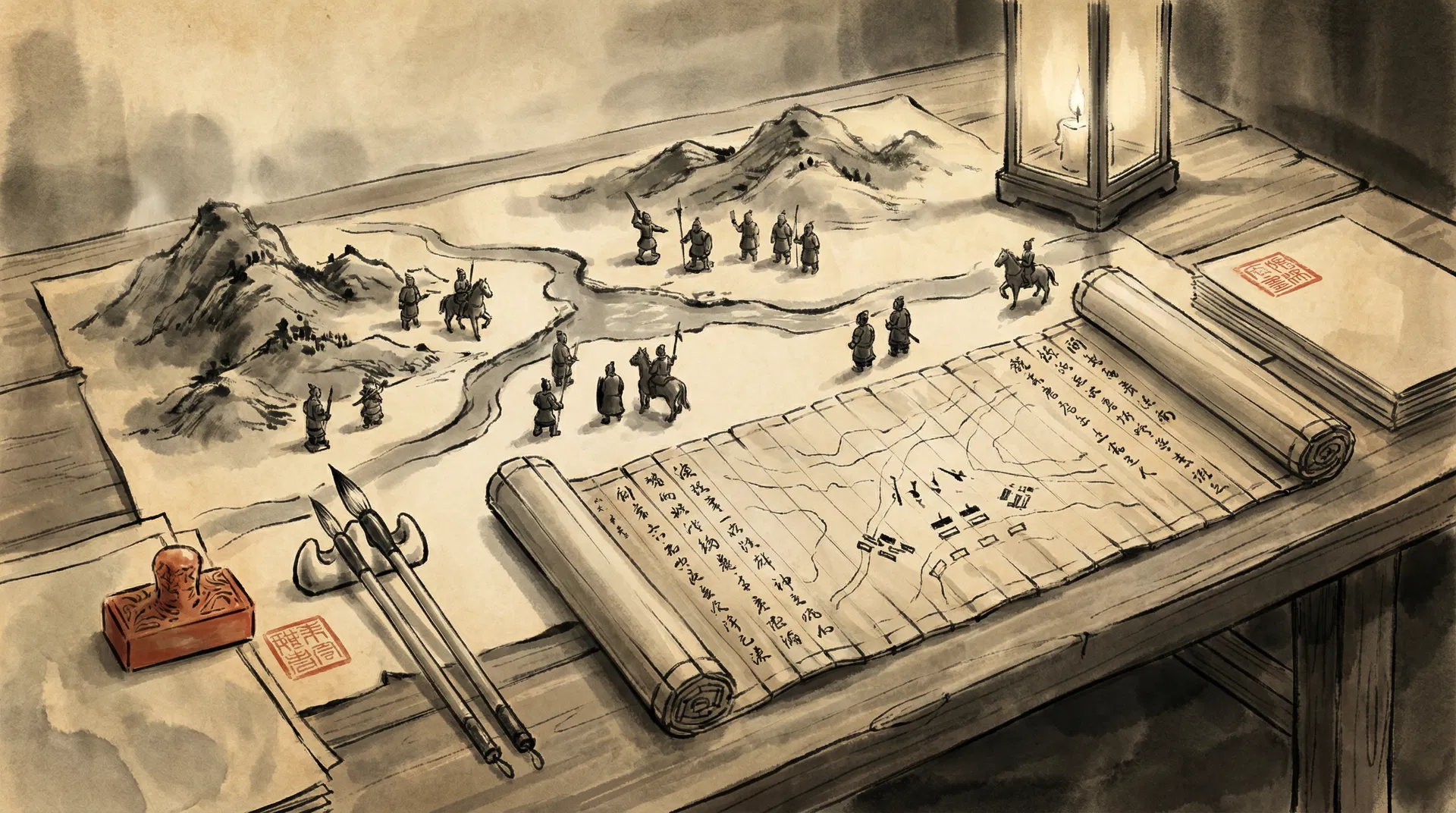
The Military Treatises
The Art of War
To become a master strategist, Zhuge Liang studied the "Seven Military Classics" of ancient China. He mastered the concepts of deception, terrain, winning without fighting, the organizational and administrative side of warfare, and civil and military strategy.
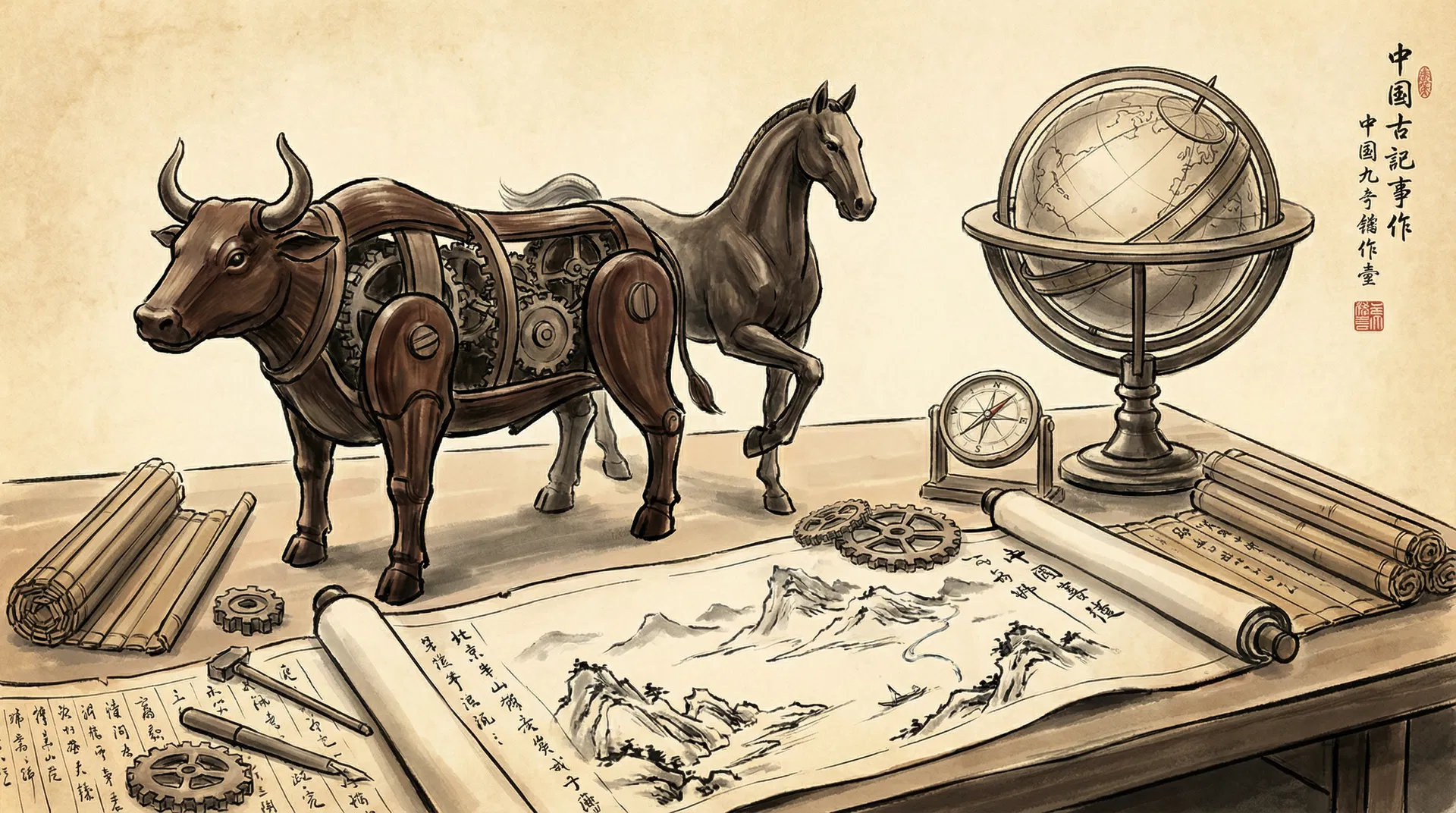
Practical Knowledge & Hidden Wisdom
Kong Ming's Own Writings & Legacy
Kong Ming lived as a hermit in Longzhong for ten years before joining Liu Bei. During this period, he studied geography, astronomy, weather patterns, celestial movements, and mechanical engineering. He also wrote his own strategic and philosophical works that have endured for nearly two millennia.